



Consultant & Contributor
Amanda Real is a licensed specialist in school psychology (LSSP) and a nationally certified school psychologist (NCSP) with 15 years of experience in public education. She began her education career working in schools as a licensed specialist in school psychology, later serving as a behavior specialist, coordinator, and director of special education services at the district level. Regionally, Amanda has previously served as the Child Find consultant for the Education Service Center, Region 20 in San Antonio, TX. Amanda’s professional leadership has included various roles on the Texas Association of School Psychologists (TASP) board, including President of the Association. Amanda is passionate about high-quality support and services to students with disabilities and the individuals who provide them.
Amanda’s professional experiences provide her with a unique perspective. She emphasizes effective and efficient systems and compliance while maintaining a strong focus on students and practitioners in daily school operations. Her areas of interest include Multi-Tiered Systems of Support (MTSS), Section 504, special education, behavior, cultural diversity, and ethics in school psychology, research, and evidence-based interventions, as well as action planning and progress monitoring.
Amanda resides in the greater San Antonio area with her husband of 12 years. She is involved in ranching, actively participates in her church parish, and enjoys gardening and cooking as hobbies.

Spanish Translations
César I. Castro was born in Veracruz, Mexico, and immigrated to Texas at twelve. He graduated from Plano East Senior High School and attended Tarrant County Community College.
Besides being a Certified Health Care Interpreter (CHI-Spanish), César is fluent in American Sign Language and has volunteered to teach the bible with Jehovah’s Witnesses in the deaf community since 2010. He has worked for various school districts as an office assistant in administration and translation. At twenty-six, he married his beautiful wife, Monique Castro, a certified A.S.L. interpreter, and moved to Fort Worth, TX.
In 2016, César joined Texas School Procedures to assist with document translation and enable Spanish-speaking students and their families to be partners in their education.
In 2024, César and Monique formally established their language-service business, Trilingual Solutions, LLC. Together, they provide in-person and remote interpreting services, document translation, and transliteration of English/Spanish content to American Sign Language for school districts and businesses in the Dallas-Fort Worth area.
They enjoy life with their three pups, Sonny (a dachshund mix), Flor (a bloodhound mix), and Socks (a lab mix). The trilingual couple loves camping, hiking, swimming, and snorkeling, among other recreational sports.

CEO & Product Developer
Debby Moore has had over 32 years of experience in Texas Public School Education as a district administrator for Administrative and Student Services, as a campus administrator for elementary and secondary levels, as a counselor for special and regular education at all levels, as a behavioral specialist, and as a regular and special education teacher. Although Debby retired in December 2010, she continued to serve in several interim school district positions, including Director of Elementary Operations, COO of Human Resources, Assistant Superintendent for Teaching and Learning, and Director of Student Services. In June 2013, Debby formed Texas School Procedures, LLC, and piloted the website with five districts across Texas. The company went public in all districts in 2015.
Responsibilities at the District administrative level included developing and overseeing the district guidance and counseling program; writing district regulations, forms, and letters; training and overseeing district discipline guidelines and other operational procedures for administrators; overseeing district safety programs; handling parent complaints and grievances; and chairing expulsion hearings. Throughout her years of service to public education and during her retirement, she has presented staff development to teachers, counselors, and administrators at local, regional, state, and national levels.
Debby has been married for 35+ years to a very loving and supportive husband. Her immediate family includes two sons, three stepsons (one of whom is deceased), one daughter-in-law (who is also deceased), and six wonderful grandchildren who bring her much joy. Debby loves spending time with their pets, Nilly and LiLo ( two rescued cats), researching, writing, and reading. Binge-watching various detective/crime/mystery series (mainly British) on Prime and Netflix helps clear the mind.

Director of Curriculum and Instruction
Gayle holds a Bachelor’s degree in Elementary Education from Missouri State University and a Master’s and Doctoral degree from Dallas Baptist University. With nearly 30 years of experience in public education across rural, urban, and suburban districts, she has served in various capacities, including teacher, principal, Director of Accountability, Area Director, Director of Elementary Education, and Assistant Superintendent. Her passion is driving school improvement efforts to foster an optimal learning environment for every student. She believes that to achieve this, we must develop highly effective leaders who can recruit, support, and retain exceptional teachers.
Gayle is married to Don, who has dedicated 34 years to Jack Henry and Associates in the banking software industry. They are proud parents of four children and grandparents, affectionately known as “Gigi,” to 10 wonderful grandchildren. Their family has also grown to include two cherished pets, Barkley, a mini Cavapoo, and Copper, a playful orange tabby. They enjoy RVing, traveling, and spending time on the lake with their boat. In her spare time, Gayle enjoys reading, playing board games, and appreciating nature through hikes, kayaking, or simply sipping coffee on the porch.

Consultant and Trainer
Dr. Boyer has worked as an educator, school counselor, student assistance coordinator, licensed counselor/supervisor, trainer/consultant, and adjunct teacher in DFW area with over 30 years of combined experience. She currently has a private practice in the Denton area, working with children, adolescents, and their families, as well as adults and couples. Consultation with educators, professional development for school counselors, and adjunct teaching at area universities are also a large part of her professional life. Glenda has been with Texas School Procedures from the beginning providing training and consultation to counselors and developing counseling presentations for the site.
Glenda’s passion is working with children and adolescents and consulting with others who share the same passion – sharing from her experience and learning the needs of counselors and their students in educational settings. Play interventions with children, hands-on activities for curriculum-based support groups, crisis response, suicide prevention, bullying prevention, and counselor self-care/burnout prevention are just a few of her current interests in working with counselors in school settings.
Personal time includes time with friends and family and a small family ranching operation. Glenda has two sons and one daughter as well as a daughter-in-law and son-in-law and five grandchildren. In her spare time, she maintains close to 400 acres in West Texas where she is the proud “parent” of 30 to 40 head of cattle.

Nursing and Health Coordinator
Lauren graduated from Hardin Simmons University in 2018 with a Bachelor of Behavioral Science degree. Before switching to an early childhood education major, she had completed all her nursing school prerequisites. Once the idea of kids came to mind, she quickly realized that education would work better for her and her future family.
Lauren is a 3rd grade teacher in a small district in North Texas. This is her sixth year as an educator. She has taught multiple grade levels and worked in various districts. During her time as an educator, she has grown to love learning about the laws and requirements for public schools. This knowledge has helped her be a better educator and a more informed parent and teacher.
Lauren has been married for 8 years to her supportive husband, and they share two little boys. She enjoys spending time with her family, researching new information, and teaching.

Director of Engagement and Education
Michelle Berry Capener, MS, LPC, is both a Licensed Professional Counselor and a Certified School Counselor with over two decades of experience in public education. She began her career working for a non-profit organization at an elementary campus. She later served as a behavior specialist at a high school and a counselor at a middle school. She spent the remainder of her time at the District level supporting counselors and AVID (Advancement Via Individual Determination) for a district with an enrollment of about 25,000 students. Michelle also facilitated over 25 Fifth Grade Career Fairs, featuring more than 60 community volunteers and serving over 700 students per event.
Michelle’s varied experience at all grade levels and her serving in both campus and district roles have provided her with valuable insights. Her commitment to establishing consistency within the district and monitoring compliance with state mandates was designed to strengthen and support District initiatives at all levels. In addition, her attention to detail and exceptional organizational skills allowed her to successfully orchestrate large district-wide events while simultaneously providing critical support to staff.
Michelle has been married to her husband, Todd, for over 25 years. She is a proud mother to her son, Jordan, who attends Dallas Baptist University. She is also an animal lover and enjoys spending time with her two cats, Jake and Daphne, as well as her beloved pup, Maggie. Michelle loves spending time on and near the water and aspires to live near the ocean one day. Personal activities include attending church, reading, enjoying live music, exercising, and spending time with friends and family.

Systems Support Coordinator
Nancy Rouse is a retired Texas educator and technology support staff member with 35 years of experience in education. Her roles in Texas schools have varied, including teaching, mentoring, instructional specialist/designer, and technology systems management. In addition to educating district teachers in current software, she became a subject matter expert on teacher web page development using Lotus Notes. She became the District Lotus Notes Administrator and Webmaster. During this time, Nancy assisted in transitioning to a new email system as the Microsoft Exchange Administrator. As Microsoft Lync Administrator, she helped usher in and manage a new phone system for the district.
Nancy’s stint as District webmaster was where she first met Debby Moore, a colleague. Debby was developing policies, regulations, and procedures for the school district, and Nancy created a website to house the “Regs,” editing and posting the documents on the Intranet. In 2016, shortly before retiring, Debby approached Nancy again, this time to join TxSP to edit documents and help manage the new TxSP website. So impressed by the regulations and best practices being developed, Nancy has continued to support her as a valued customer service representative and document and website manager.
Nancy has three grown sons, two daughters-in-law, and five grandchildren—four boys and, finally, a girl. She enjoys her most precious gift: her family, and the time she spends with them, whether vacationing, camping, fishing, or laughing.

Director of Student Support
Ri Trotter is a retired Texas educator (and former CPA) with 20 years of experience in education. Her roles in education include teaching special education students, teaching general education classrooms, serving as a Campus Intervention Specialist, leading a campus mentor, and performing several other campus leadership roles.
Ri joined the Texas School Procedures team in August 2022 and contributes through research and writing on various educational topics.
Ri and her husband have three grown and married children and nine grandchildren, ranging in age from 17 to 2. She enjoys spending time with her family (especially the “Grands” and all the activities and sporting events) and participating in the many chores required to establish the recently acquired family ranch/farm.
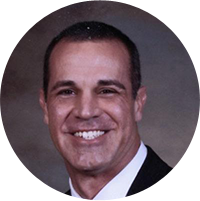
CFO and Operations
Rich has served in various industries’ customer service and sales positions before joining Texas School Procedures, starting in June 2013. Rich was instrumental in developing the company’s behind-the-scenes core set-up and operations with company attorneys and establishing business procedures to ensure smooth operations and functioning. He continues to manage all operational aspects of TxSP and as liaison to subscribing districts, providing all “vendor” documents.
Rich is the proud father of one daughter, Dilyn, and will tell anyone she is his priority. They enjoy being outdoors and doing anything athletic together, such as swimming, hiking, running, biking, paddle boarding, fishing, camping, and kayaking. He is a very involved parent who attends any school activity or parent conference. He has supported her outside karate, dance, basketball, and softball activities, to name a few.
Rich is also an advocate of animals and rescues his fur pets from organizations that take in forgotten animals off the streets. He currently has Kong (a “pitta”) and Bruiser (a “Chiweenie”) that he adopted from South Side Street Dogs, a non-profit vegan Animal Rescue in Houston, Texas.